Precise MRI diagnostics: New MRI scanner at Helios Hospital Pforzheim
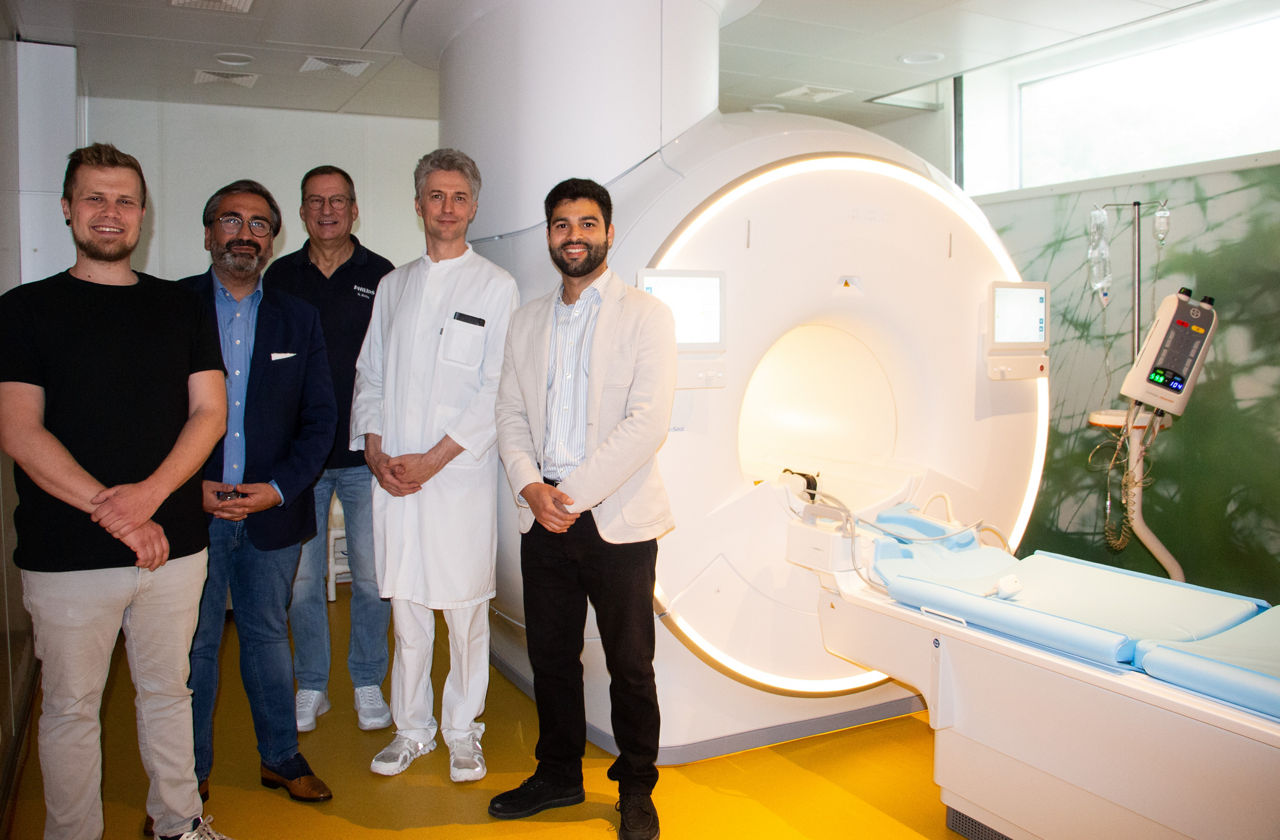
Magnetic resonance imaging (MRI) enables highly precise examination of bones, joints, soft tissues, and internal organs. This imaging technique does not use X-ray radiation, making it particularly safe and gentle for patients. The new MRI system offers numerous benefits not only for the Radiology Department and the hospital as a whole, but also for patients.
Faster MRI scan times
Patient preparation takes less than a minute, and the examination begins immediately with a single click. Routine MRI scans take about five minutes, while whole-body scans are completed in under 20 minutes — half the time required by conventional MRI systems. Shorter waiting and examination times, combined with an acoustic patient guidance system, can significantly reduce stress. Relaxing sounds, ambient lighting, and an integrated climate control system further enhance patient comfort during the examination.
A wider MRI bore provides more space and greater comfort, particularly benefiting patients with claustrophobia. It also makes examinations significantly more comfortable for patients with obesity.
Expanded diagnostic capabilities and improved image quality
Shorter examination times make it possible to perform significantly more MRI scans while maintaining outstanding diagnostic quality. The new MRI system is particularly effective at rapidly detecting sports injuries such as ligament tears.
Thanks to its innovative lightweight coils, the scanner produces highly detailed images of even complex anatomical structures, including when patients move during the examination. Tiny bone and tendon structures, as well as subtle changes throughout the body — such as fistulas — can be visualized more precisely and detected at an earlier stage.
Large blood vessels, including the aorta and leg arteries, can be examined more quickly and often without the need for contrast agents. The new MRI system also provides reliable visualization of primary tumors of the liver, breast, brain, and especially the pancreas, as well as bone metastases and metastases in organs such as the liver and adrenal glands.
The system also plays an important role in preventive medicine. Cardiac MRI can detect silent heart attacks at an early stage, while imaging of plaque deposits in the carotid arteries helps assess the risk of stroke.
An exceptionally large field of view and a high signal-to-noise ratio significantly improve image quality while reducing the need for repeat examinations. Emre Nazli, Managing Director of Helios Hospital Pforzheim said:
“With our new MRI scanner, we offer state-of-the-art medical diagnostics, including intelligent AI-assisted imaging. This latest technology supports our physicians in making accurate diagnoses, which form the basis for planning further treatment. Key examination workflows and image processing are performed automatically and are better tailored to each patient's individual needs. In this way, we once again reinforce our commitment to providing the highest standard of medical care for the people of Pforzheim and beyond.”
Modern cooling technology and remote maintenance
The new MRI system features a specially designed magnet that is filled with a small amount of helium only once before being permanently sealed. A single helium fill is sufficient for the scanner's entire service life, eliminating the continuous consumption of helium that conventional MRI systems require to cool their magnets.
Another advantage is that the system can be serviced and updated remotely.
“I am delighted that we now have this modern, state-of-the-art MRI scanner. It enables us not only to perform examinations more quickly but also to achieve higher-quality imaging and more accurate diagnoses. With this investment, we are embracing advanced, sustainable, and innovative technology. Thanks to AI support, the scanner can automate many complex tasks, allowing us to focus on what matters most—providing our patients with an accurate diagnosis that serves as the foundation for targeted treatment by their physicians,” said Dr. Jonas Apitzsch, Head of the Department of Radiology.
During the renovation of the Radiology Department, a mobile MRI unit was available on site to ensure around-the-clock access to MRI examinations at the hospital. Special thanks go to the entire Radiology team, led by Dr. Jonas Apitzsch, whose dedication and commitment ensured uninterrupted diagnostic services throughout the renovation period.
Read more:
Do you need more information about Helios Hospitals or want to schedule your treatment?