Helios Bad Kissingen: Successful treatment of severe neuralgia
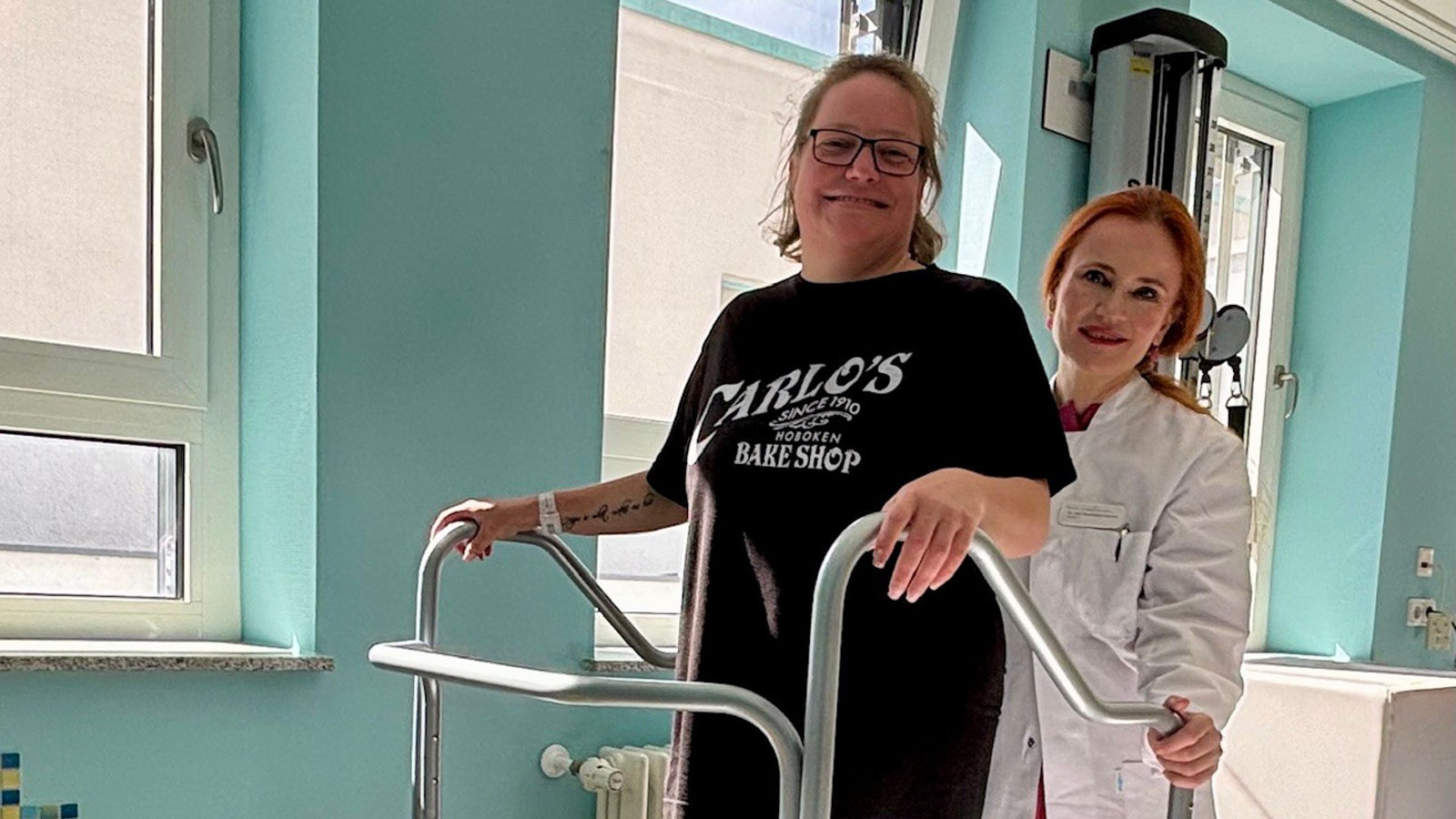
Only a few steps with forearm crutches — otherwise a wheelchair: this had been everyday life for Jacqueline Rügamer from Leinach for many years. It all began with a herniated disc in 2007. Over the following years, she required several additional surgeries. In 2023, an accident caused damage to the spinal nerves in her lumbar spine. She could barely lift her right leg. Severe neuropathic pain, muscle weakness, and eventually the inability to work followed. Numerous treatments failed to provide the desired relief. It was only after she was referred to the Multimodal Pain Therapy program at Helios St. Elisabeth Hospital that a new path opened up for the now 47-year-old patient.
Ms. Rügamer had developed a severe neuropathic pain syndrome. Physicians refer to this condition as causalgia — a chronic, burning pain that can occur after damage to nerve roots. The pain is often extremely intense and cannot be explained solely by the original injury. Instead, it results from a dysfunction of the nervous system, explains Dr. Maximiliane Deckart, Head of the Department of Pain Medicine at Helios Hospital in Bad Kissingen and Ms. Rügamer's treating physician.
For many years, Jacqueline Rügamer depended on high doses of pain medication. The implantation of a nerve stimulator had already provided some pain relief and allowed her medication to be reduced. Nevertheless, she remained severely limited in her daily life. She arrived for treatment in a wheelchair. "I had more or less come to terms with my situation," says Ms. Rügamer.
During a two-week inpatient multimodal pain therapy program, her pain syndrome was treated using a targeted, interdisciplinary approach. The treatment included electrotherapy, occupational therapy, gait training, and mirror therapy. In mirror therapy, the brain is shown the movement of the healthy side of the body as if the affected side were moving normally. Repeated practice can help reduce pain perception and improve motor function.
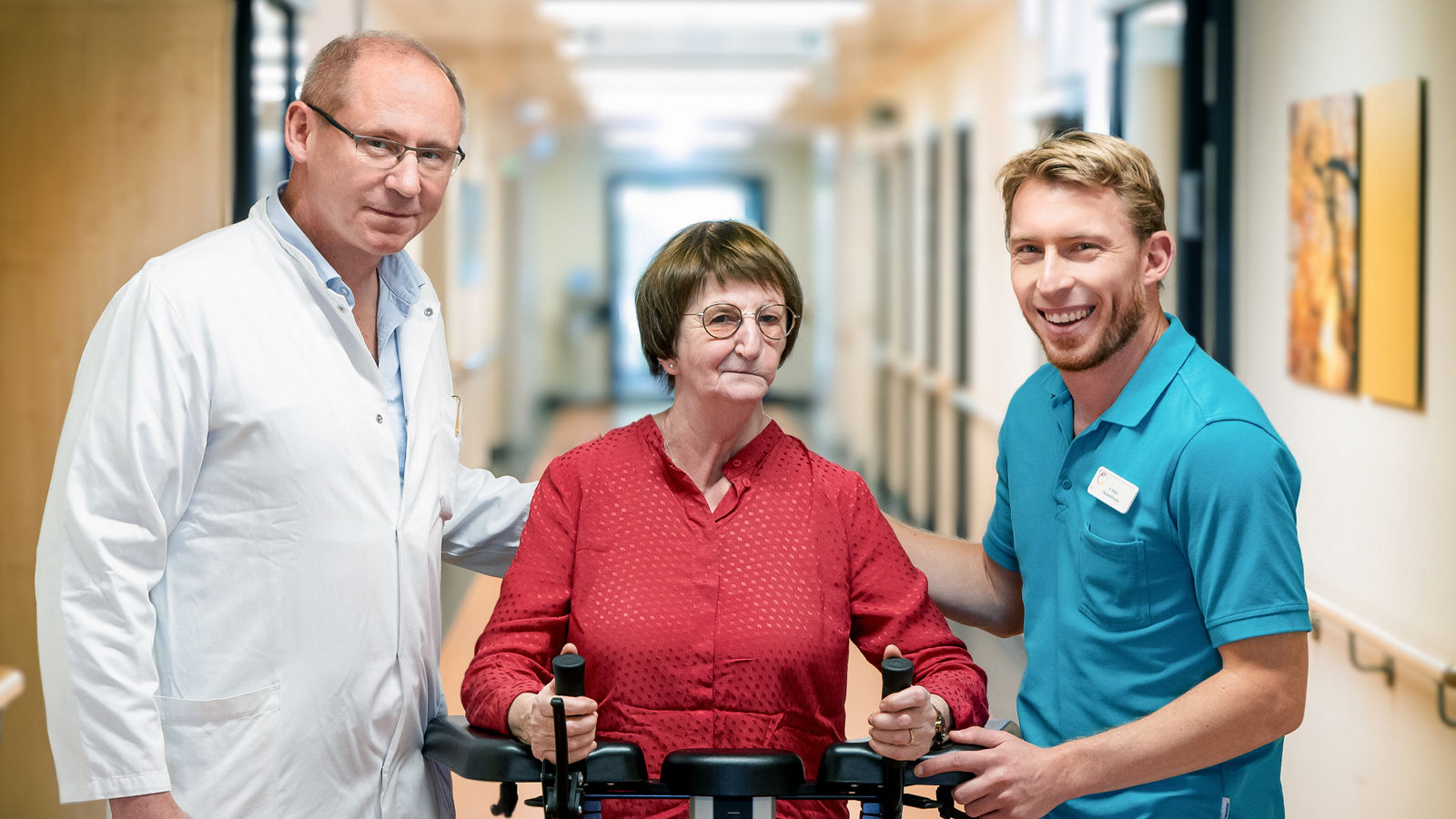
With the support of an orthosis and forearm crutches, Ms. Rügamer practiced walking every day. Gradually, she was able to involve her right leg more actively in movement again. At the same time, targeted exercises strengthened the muscles of her upper body and leg. For Ms. Rügamer, being able to stand upright and walk again was especially meaningful. It restored a sense of normality and had a positive impact on her emotional well-being.
According to Jacqueline Rügamer, the active therapy was physically demanding. At the same time, it helped her overcome feelings of resignation: "My pain has been reduced by at least half. I can finally see light at the end of the tunnel again."
Today, shortly after her discharge from "Eli" (Helios St. Elisabeth Hospital), Ms. Rügamer enjoys significantly greater independence than she did at the beginning of treatment. Her story demonstrates the importance of not giving up too soon, even in the face of chronic neuropathic pain, and of combining different therapeutic approaches in a targeted and coordinated manner.
Read more:
Do you need more information about Helios Hospitals or want to schedule your treatment?