A small victory for 4-year-old Ole after three months in bed
Four-year-old Ole suffers from severe pulmonary arterial hypertension. “The blood vessels in his lungs are so severely narrowed that his heart can no longer cope with the increased resistance and maintain normal blood flow. This leads to high blood pressure in the lungs and, as a result, right-sided heart failure,” explains PD Dr. Michael Weidenbach, Senior Physician in Pediatric Cardiology at Leipzig Heart Center.
In June, he was airlifted to Leipzig Heart Center in a life-threatening condition. Being placed on extracorporeal heart and lung support initially saved his life. However, Ole urgently needs a lung transplant to survive. Together with his family, he is waiting for a donor organ in the pediatric intensive care unit.
Thanks to the efforts of the perfusion team and the University Department of Pediatric Cardiology, Ole can at least occasionally leave his hospital bed while he waits. Accompanied by medical staff, he can go outside in a wheelchair and spend some time on the grounds of Leipzig Heart Center, enjoying the fresh air and sunshine.
Ole’s medical history
Ole’s illness initially developed gradually, with symptoms including general weakness, abdominal pain, and paleness. When he was admitted to a hospital in Halle on June 12, 2026, he refused to walk and was severely exhausted. His condition then deteriorated rapidly, and just two days later he was airlifted to Leipzig Heart Center. At the time, no other hospital in Germany, Austria, or Switzerland had both the capacity and equipment required to admit Ole.
“Of course, we primarily specialize in heart and cardiovascular diseases. However, we have the technical equipment and medical expertise needed to treat Ole. For us, there was no doubt that admitting him was the right decision. Otherwise, he would have had no chance of survival,” – Dr. Weidenbach.
At Leipzig Heart Center, it quickly became clear that Ole’s heart and lungs could no longer function without mechanical support. “Immediately after admission, Ole required resuscitation, so as an emergency measure — extracorporeal cardiopulmonary resuscitation — we connected him percutaneously to a venoarterial extracorporeal membrane oxygenation system, or VA-ECMO. This procedure can only be performed at a small number of centers in Germany. Three weeks later, a permanent access was implanted for long-term ECMO support. The system now takes over both the heart’s pumping function and the lungs’ gas-exchange function. Without this support, Ole would not be alive.” explains Hans-Martin Vincenz, Head of Perfusion and Technical Medicine.
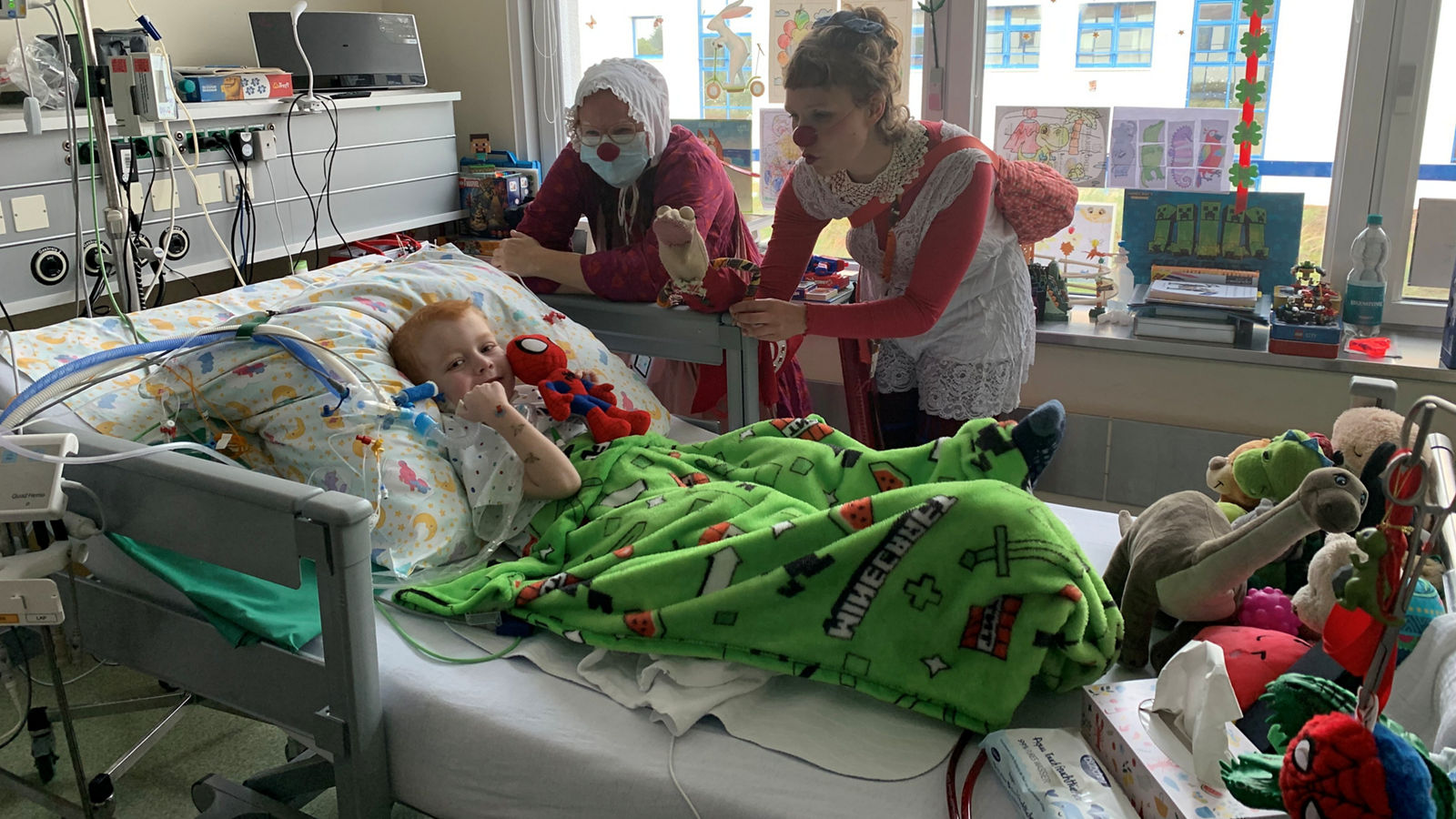
Since then, Ole has remained on ECMO in the pediatric intensive care unit while waiting for a suitable donor organ. He is listed as a high-priority transplant candidate. As soon as suitable donor lungs become available, he will be airlifted to the Pediatric Transplant Center at Hannover Medical School. “The pediatric intensive care team is doing an extraordinary job caring for Ole. Providing intensive care for a child over such a long period is extremely challenging, but the entire team works closely together. Pediatric intensive care, physiotherapy, pediatric cardiology, and perfusion — we are all rooting for Ole and fighting for him,” says Hans-Martin Vincenz.
In consultation with the hospital management, he ordered one of the smallest pediatric ECMO systems available, which is also approved for air transport. This system allows Ole to leave his bed and the intensive care unit for short periods. “It isn’t easy for Ole or for us to spend the entire day in the pediatric intensive care unit. That’s why the little outings to the helipad and around the hospital grounds have brought him so much joy. Even going down the hallway or riding in the elevator is exciting for him. We are incredibly grateful that Leipzig Heart Center is not only fighting for Ole’s life but is also doing everything possible to make his time in the hospital and the wait as comfortable as possible,” says Ole’s father, Falko Kühnemund.
Leipzig Heart Center is also responsible for planning Ole’s transfer to the transplant center in Hannover. The new ECMO system meets the requirements for this transport. A special stretcher has also been ordered to transport Ole by helicopter. Medical experts in Leipzig and Hannover, paramedics, perfusion specialists, and potential medical transport providers are already coordinating closely to ensure that Ole can be transferred safely. Everything must be ready when the time comes.
Read more:
Do you need more information about Helios Hospitals or want to schedule your treatment?